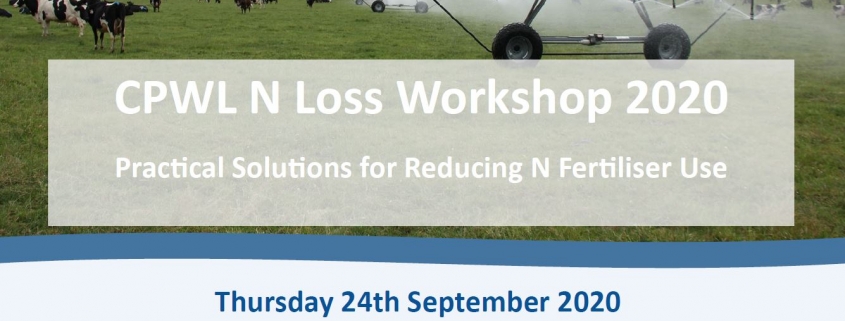
Mid Canterbury dairy farmers are being urged to start cutting their synthetic nitrogen fertiliser use this season in anticipation of the 190kg per hectare cap being implemented from July next year.
At an Irrigo Centre Facing our Future expo and trade show at the Hotel Ashburton, farmers were told that water quality in Mid Canterbury was under stress and a lot of this was connected to farming activity.
Six irrigation schemes operate under the Irrigo banner, covering 180,000 hectares in Mid Canterbury. Collectively, this represented 20 per cent of New Zealand’s irrigated area, Irrigo Centre environmental manager Eva Harris said.
“So, the changes that we make individually will collectively make a big difference to water quality in our catchment.”
Tighter regulations, cutting nitrogen applications and nitrogen loss into the environment were being imposed because water quality trends were not going in the right direction, Harris said.
“I can’t fight your corner until I see these trends go in the opposite direction. So, we need to make change to see change.”
Positive change was occurring with almost 75 per cent of Barrhill Chertsey Irrigation shareholders now meeting good management practice, compared with 10 per cent when the auditing programme started about five years ago.
As 80 per cent of Irrigo shareholders applied an average of more than 190kg/ha of nitrogen, the Government-imposed cap would have a significantly disproportionate impact on Canterbury farmers, Harris said.
Information provided to Irrigo from farmers’ nutrient budgets showed that while some big nitrogen users were applying up to 500kg/ha, the average application rate was coming down.
Last year, Mid Canterbury dairy farmers applied an average 220kg/ha of nitrogen, down from 250kg/ha in 2015-18.
About 10 per cent of Irrigo shareholders were applying more than 300kg/N/ha, Harris said.
No information had been provided by government on how the 190kg/ha cap would be calculated, or what product types were included, though it had indicated it applied to synthetic nitrogen fertiliser.
Virginia Serra, of DairyNZ, who is leading a five-year project to reduce nitrogen losses from dairy farms in the at risk Hinds and Selwyn water catchments, said that work to date had been looking for solutions for the whole farming system and the whole nitrogen cycle.
“To date we have focused on output, which is what is lost to the environment. With this new regulation we are forced to concentrate on one particular input – nitrogen.”
As well as applied nitrogen, the other main sources of nitrogen in pastoral farming were supplementary feed and nitrogen naturally fixed by legumes such as clover.
Nitrogen fertiliser was strongly correlated with nitrogen surplus and a higher nitrogen surplus was strongly correlated with nitrogen loss, Serra said.
“So while we would have preferred not to have this input control, it is taking us in the right direction.’
Farmers could drop nitrogen usage by about 20 per cent from higher rates of around 300kg/ha without major effect, but cutting the last 40kg from the average application rate of about 230kg/N/ha down to the new cap “could be challenging”, Serra said.
Normally it would take two to three years to increase clover content in pasture, to offset the fall in nitrogen use, and to make other management changes.
“It is difficult to have a hard number with a biological system.”
Serra advised farmers to make half the cut this season and the other half from July 2021, to meet the nitrogen cap.
Farmers still needed to get clarity on whether fertiliser use was calculated over the total or effective farm area, how effluent and non-effluent areas would be considered, how nitrogen use on crops in the milking platform would be considered, and how the cap was going to be monitored, Serra said.
– By Heather Chalmers